
Deployable structure
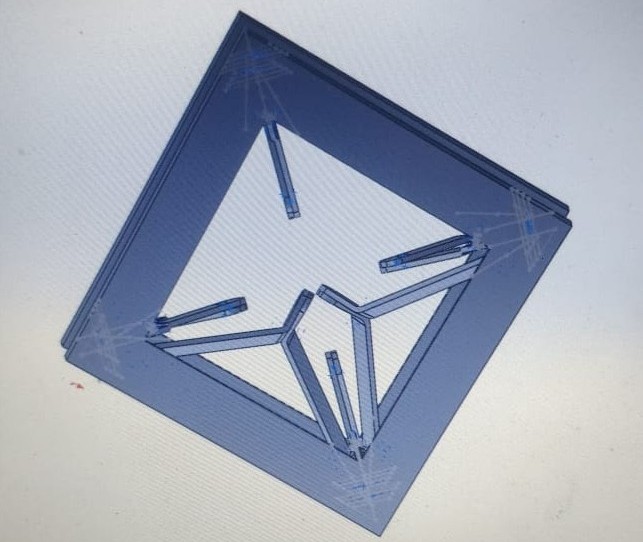
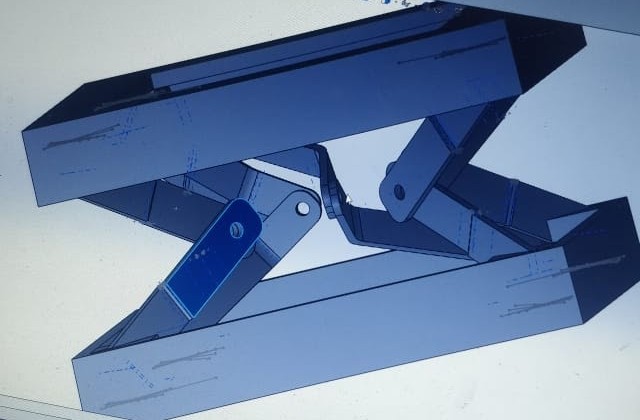
In order to make the living spaces more dynamic and lively, we plan to include the elements of dynamic and active structures which can morph into required shape on demand, providing us with the required flexibility in the living space.A deployable structure is a structure that can change shape so as to significantly change its size. They can fold, be used for transportation or for storage. Also these kind of deployable units will prove to be very helpful for us from the viewpoint of saving time of construction.
Advantages
- These structures vibrate readily means they are transforming the loads very rapidly.
- This is very useful in terms of absorption of shocks and seismic vibrations.
- Self scaffolding structures- easy to construct.
Disadvantages
- The inflation may be uncontrolled resulting in undesired deployed shape and that the structure may need to remain inflated to retain stiffness, hence meteorite damage becomes a serious problem.
- The disadvantages are the complexity of the parts, friction in joints, weight and precision necessity. Also the structures may be costly in parts and assembling.
- Difficulty in design and shape control.
Design criteria
The main design criteria in deployable structures are the compactness of the stored configuration, dimensional tolerances, rigidity of the deployed configuration, ease of deployment, durability and endurance of the system and of course the cost. Light weight is also required in case we are planning to for vertical extension.FRP Based design ( Renovation )
Since the embodied energy in construction involved is huge and constitutes a significant proportion in houses carbon footprint, it is speculated that using FRP (Fibre reinforced plastic), which has much higher strength / weight ratio, might prove to be beneficial for the cause. FRP has a polymer matrix reinforced by fibres running around in different directions.Advantages
- Corrosion Proof
- High UTS (Ultimate tensile strength) and Young’s modulus
- Light Weight
- Fatigue Resistance
- Electrically Non-Conductive
- Waste FRP can be cut and used in Concrete as aggregate
Disadvantages
- Absence of readily available design codes
- Non Linear analysis involved in characterising the materials behavior
- Unavailability of codes and methods for health monitoring of FRP based structure
- Low Ductility, fickle plastic behaviour
- Low Shear Strength
- High Cost
- Need to analyse Long term Carbon Emission impact
- Health Issues to Humans - Irritant - Skin, Eye, throat